Understanding Your Cycle: Part 1, The Menstrual Phase
- Mar 5, 2025
- 3 min read
Happy Women's History Month! To celebrate, we will be posting a blog each week
going through the FOUR phases of the menstrual cycle. Each week will feature a full download on each phase - a full disclosure explanation of hormones, symptoms, norms, and impact on athletic performance. This article will focus on the menstrual phase and its unique characteristics.
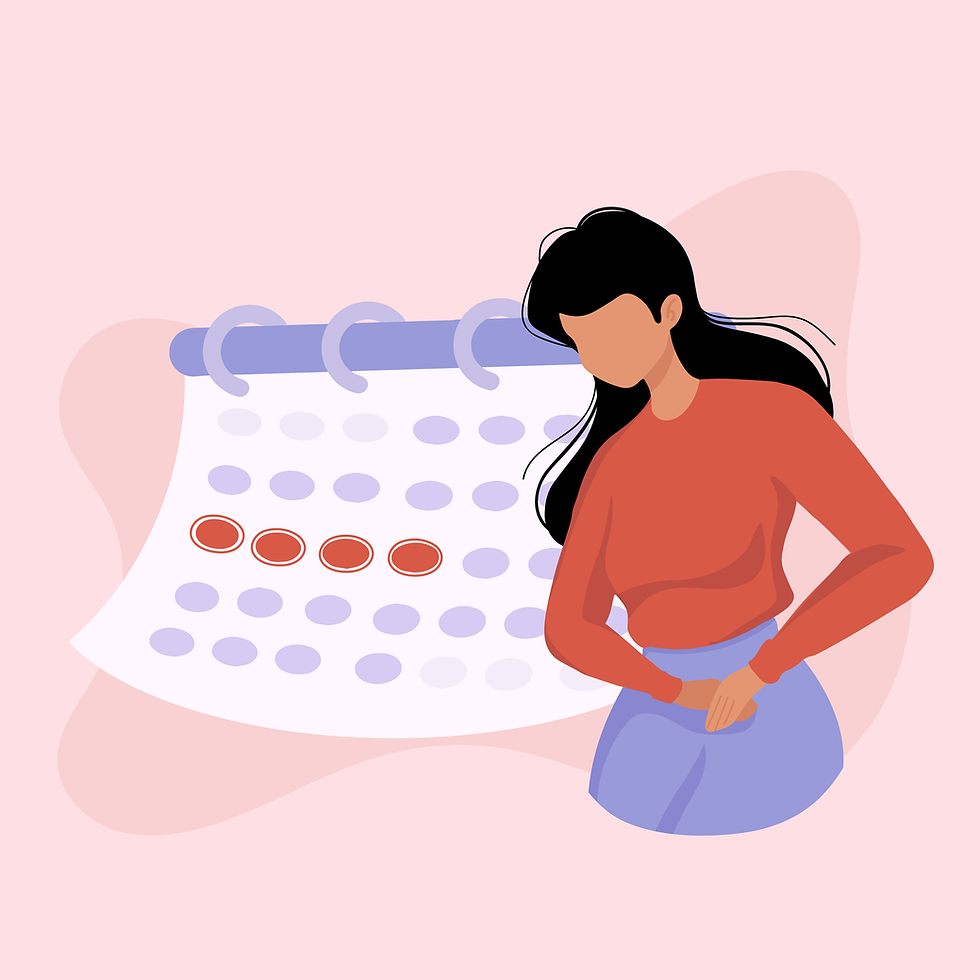
The menstrual phase marks the beginning of the menstrual cycle and is characterized by menstrual bleeding. Here's what to know about this phase:
Start Date: The first day of bleeding is considered day one of the menstrual cycle.
Duration: The period usually lasts for five to seven days.
Blood Loss: During a healthy period, blood loss typically ranges between 30ml and 50ml. Losing over 80ml is considered heavy menstrual bleeding.
Managing Flow: In a healthy cycle, changing a tampon or pad should not be needed more often than every three to four hours. Soaking through products more quickly may indicate heavy periods.
Hormonal Changes During Menstruation
The menstrual phase occurs because oestrogen and progesterone levels drop to their lowest levels at the end of the luteal phase if an egg wasn't fertilized.
Importance of Understanding the Menstrual Phase
Menstrual cycle regularity is a good indicator of overall health. The characteristics of the menstrual phase, such as duration and flow, can offer insights into a woman's health. Let's take a closer look...
What is Normal:
The menstrual cycle is a predictable pattern of hormonal fluctuation across roughly twenty-eight days.
The first day of a woman’s cycle is marked by the start of menstrual bleeding.
In a healthy cycle, bleeding shouldn’t be so heavy that a tampon or pad needs to be changed more than every three or four hours.
In a healthy cycle, bleeding shouldn’t be so heavy that you have to change a traditional period product, like a tampon or pad, more than every three or four hours.
The characteristics of the menstrual phase, such as duration and flow, can offer insights into a woman's health.
Influences on the Menstrual Phase:
There is a lot of variation between women in terms of the levels of hormones we each produce, our ability to metabolize these hormones and our sensitivity to them.
Factors such as lifestyle, sleep, diet, type and amount of physical activity, as well as illness and injury, can also influence the release and effect of the cycle hormones in our bodies.
Cycle regularity is a good indicator of lifelong health, and reflecting on what, if anything, has influenced your cycle’s regularity is valuable.
Unwanted symptoms of the cycle might be a sign that the important act of ovulation hasn’t gone according to plan.
Heavy periods can be caused by too much oestrogen, which builds up the lining of the uterus, and not enough progesterone, whose job is to stop that build-up.
Symptoms During the Menstrual Phase:
Some women may experience more severe symptoms than others.
Commonly reported symptoms include headaches, breast pain, gastrointestinal issues, anxiety, brain fog, and difficulty sleeping.
Emotional symptoms such as feeling emotionally fragile are also possible.
Gastrointestinal issues, including constipation, can occur due to peaking progesterone levels slowing down transit time through the digestive tract.
Breasts may become enlarged or sore just before the period.
Premenstrual magnification can occur, where existing conditions like IBS are worsened.
Impact on Athletic Performance:
Menstrual cycle symptoms can affect a woman's motivation to move or the quality of her workout for many days each month.
Low hormone levels may influence how you feel physically and emotionally, potentially affecting training and competition.
Some women have recurrent niggles that sometimes flare up, such as a sore lower back or a tight hamstring, and can share this information with their physio or healthcare practitioner to help them identify possible causes.


Comments